

If you're convinced that your IBS gets worse in the heat then don't sweat it, you're not alone. Today we'll chat about how to make your gut feel better as the temperature soars. I'll also be sharing my top tips on eating for IBS in summer.
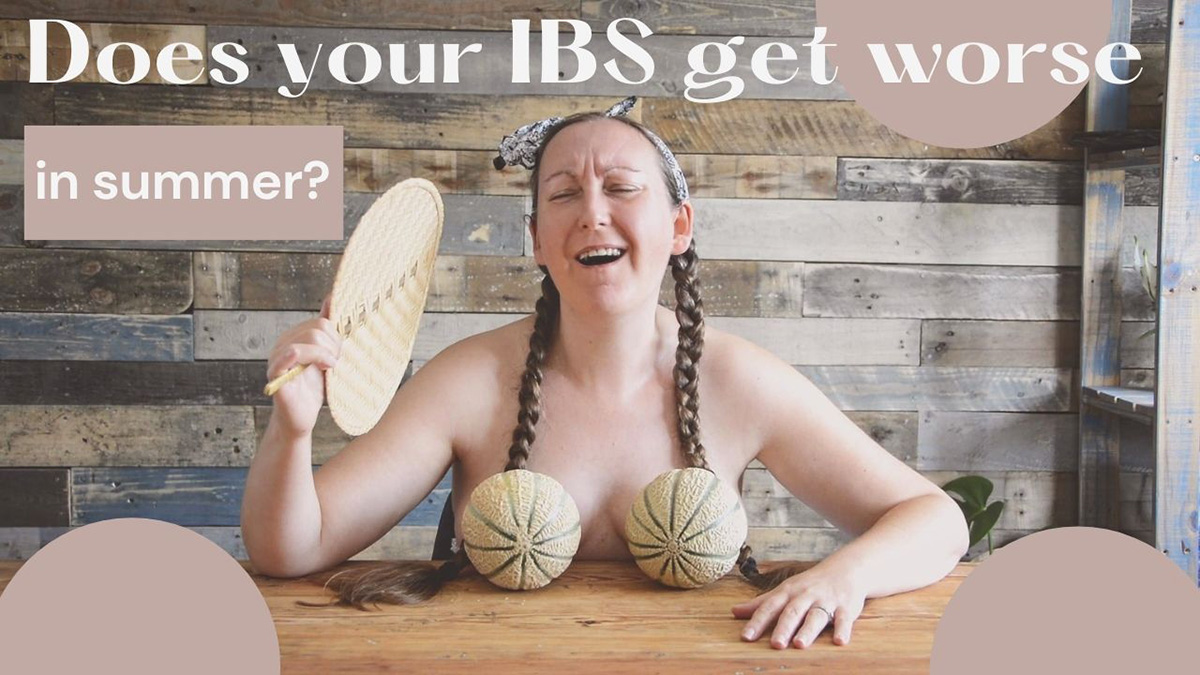
Although it's not something that's been massively researched if you ask anyone you know whether their IBS and overall gut health gets worse or better in hot weather and I'm pretty sure the majority of people will say it gets worse, much worse.
Jump to:
Scientific studies into heat and gut issues
This study conducted in Switzerland in 2013, looking at hospital admissions over the space of 5 years, found that whenever a heatwave occurred there was an increased risk of flare-ups in patients with inflammatory bowel disease such as Crohn's and ulcerative colitis. They also found that for each additional day of a heatwave, the likelihood of needing to be hospitalized for infectious gastroenteritis also increased.
Now the reasons as to exactly why this happens are still not fully researched or widely agreed upon. Possible contributing factors include;
- dehydration, which is more common in hot weather
- individual behaviour and diet change during hotter weather
- reduction of sleep due to hot, sweaty nights
- reduction in exercise and movement cos it's just too hot to be bothered
- humidity is thought to have a negative impact on serotonin. As more than 90% of serotonin resides in the gut and contributes to our gut secretions, motility, mood and pain receptors, it seems to make sense that this would have a significant effect.
Whilst this research didn't specifically focus on IBS patients I think it's fair to say that when we take the contributing factors into account the chances of your gut feeling worse rather than better in the heat could apply to most of us.
Another study found that people with both IBS-D and IBS-C were more sensitive and less tolerant to heat than those in the control group.

IBS friendly meal ideas for summer
So other than trying our best to keep cool, stay hydrated, get proper sleep and rest and gentle exercise during the coolest parts of the day what specifically can we do when it comes to food, eating and the low fodmap diet, that encourages us to nourish our bodies when the last thing we feel like doing is turning on the stove?
No-cook meals
- overnight oats
- cereal with fresh fruit and yoghurt
- smoothies
- juices
- sandwiches
- salads
- cold soups
- loaded corn nachos or tortillas
- rice paper summer rolls
- lettuce cups
- nori or kale wraps
- graze boards with crackers, veggie sticks, olives, cheese, nuts and dips
And yes, everything I've just mentioned includes safe servings and can be adapted to and enjoyed on a low FODMAP diet. If you're not sure how to do that, or in what quantities, then I highly recommend you take a look at my guide to understanding the Monash FODMAP app.
Quick-cook meals
But if raw and cold is just not your jam then consider things that need minimal cooking. Most of these things take less than 5 minutes and need only a grill pan, microwave or boiling water;
- toasted sandwiches or paninis on gluten-free or sourdough
- burritos and quesadillas made from corn tortillas
- miso soup
- vermicelli rice noodles
- instant mashed potato
- fresh gluten-free gnocchi
- fresh gluten-free pasta (For my fellow vegans this one seems much less likely as most of the quick-cook fresh pasta is egg-based.)
- courgetti/zucchini zoodles
- vegetable rice
- spiralized sweet potato
Pre-made meals
Don't overlook pre-cooked items. Most things such as grains, canned beans, tofu and pre-made sauces can be eaten straight from the pack. If you prefer they can be quickly microwaved or heated in a saucepan. What would typically take an hour or more from scratch can be turned into a filling, protein-packed meal and on the table in less than 5 minutes. My favourite options include;
- packet rice, quinoa or mixed grains
- canned lentils, chickpeas, butterbeans, black beans and frozen edamame
- smoked tofu (my preferred brand is Taifun, but not all flavours are low FODMAP)
- low FODMAP brands of sauces and marinades. Whilst not a meal in themselves they can help to elevate the simplest meal of beans and rice into something tasty. Head to Fodmarket for 10% off your first order (Affiliate link).
And I fully understand that not everyone can get on board with the extra cost or packaging involved in pre-cooked food. My suggestion here is to set aside an hour, once a week during the coolest part of the day, I prefer the early morning, to batch cook, sprout or ferment a selection of grains, beans and veggies. These can then be stored in the fridge and you can pick and choose from them for the rest of the week to create quick and easy meals.

Tips for eating more fruit and veg
Now I know that raw veggies and fruit can be a trigger for some people with gut issues. If you're not used to eating raw foods then take it slowly. Try incorporating some cooked and some raw foods into the same meal. I like to do this by;
- adding fresh fruit onto porridge or cereal
- sprinkling chives, spring onion greens, sauerkraut or sprouted lentils onto soups and sandwiches
- having a fresh, raw salad alongside a bowl of pasta or a curry
Some other tips to give your digestion a head start include pulverising your fruit and veg into juices, smoothies, soups, dips and sauces to help them break down easier in your gut. Something as simple as chopping everything from salads to fruits finely and chewing slowly and thoroughly may help.
If too much fibre seems to be an issue, try peeling and scooping away the bulk of the insoluble fibre. This is typically found in the skin, peel, pith and seeds of fresh fruit and vegetables.
Consider fermented veggies such as sauerkraut, kimchi, radish, carrot, green beans and cucumber. Not only have they been partially pre-digested during the fermentation process but you'll also be getting a good dose of gut-friendly bacteria with every bite.
Edit - June 2022 - I've recently created a series of videos dedicated to the 30 plants challenge and eating a more diverse range of plant foods and fibre.
Meal planning for summer
Typically if I know we're in for a bit of a heatwave I try to check the weekly forecast ahead of my shopping and prepping. This is so I can attempt to meal plan, batch cook or prep more labour-intensive meals for the cooler upcoming days.
Now, of course, relying on the weather forecast often doesn't work out for the best. However, it can help to initially motivate you when you're struggling to decide what to eat. It encourages you to get that shopping list written or put that plan into place.
More often than not, once the ingredients are sitting there in the fridge, you'll likely go ahead and prepare and eat what you planned anyway, regardless of the weather.
If you can't face cooking or eating what you have on hand don't forget to make full use of your freezer. Most fresh fruit, vegetables, herbs, cooked grains, beans, tofu and bread can be safely frozen.
My favourite go-to resource for all things safe storage and freezer-friendly is the fabulous Kate over at The Full Freezer. She's making it her mission to take the stress out of mealtimes and reduce your time, money and food waste. This helpful blog post on 3 tips to make your food last longer during lockdown, answers some of the most common questions I see about freezing fruit and vegetables.

Eat your water
I'm a big fan of eating my water. Many fresh fruits and veggies contain high amounts of water. The great thing about eating your water is that it also comes with a hefty dose of vitamins, minerals, antioxidants and all-important soluble fibre.
Now don't get me wrong this isn't a reason to neglect your hydration but for people with gut issues, that get really full and bloated by drinking lots of liquid, it's a great hydration boost.
Some of the most hydrating fresh foods are low FODMAP such as;
- carrots
- cucumber
- fresh herbs
- leafy salad greens
- lettuce
- oranges
- radish
- spinach
These can all be eaten according to appetite.
Other water-rich foods with low FODMAP servings include;
- bell pepper (green) = 75g
- blueberries = 125g
- bok choy/pak choi = 75g
- broccoli (heads) = 75g
- celery = 10g
- courgette/zucchini = 65g
- fennel = 48g
- kiwi = 150g
- honeydew melon = 90g
- oyster mushroom = 75g
- pineapple = 140g
- strawberries = 65g
- tomatoes (common and vine) = 65g
- tomatoes (roma) = 75g
I don't know about you but I can easily think of ways to add any of them to every meal of the day.
Edit - This list was updated in April 2022 to reflect the changes to FODMAP serving sizes in the Monash app.
Tips for staying hydrated
Whilst we're on the topic of water I have two videos on my YouTube channel dedicated to getting more water. Today I'll just touch upon the fact that most people with gut issues do better with sipping water gradually throughout the day rather than chugging gallons all at once.
Not only is it less likely to cause bloat but it's also absorbed and put to better use by the body. Anyone that's ever tried to acutely up their water intake will be familiar with how quickly it's flushed straight through the system until your body gets used to the increase.
There are tons of apps that are designed to remind you to drink frequently throughout the day. Alternatively, set a reminder on your phone to go off every 30 minutes until you get into the habit.
Preparing your food with extra water can also help to boost your intake throughout the day. Everything from broths, soups, smoothies, juices and even porridge can be prepared with extra water.
Also when it comes to water, temperature could be key. There's a lot of debate about this, but based on the research I've read it appears that ice-cold water may not be the best thing to cool you down on a hot day.
Although the immediate cooling effect on the mouth, tongue and throat can be a blessing on a hot day it seems that once ice-cold liquids hit the stomach your body has to work harder to bring the liquid up to body temperature before it can begin to make use of it.
This extra work in the digestive system can raise your internal body temperature. This may result in you feeling warmer rather than cooler.
Lots of people with or without functional gut issues report experiencing cramps and diarrhoea after drinking very cold liquids. So if at this point your diet is basically ice lollies and slushies but you've noticed you're gut is all out of whack then try laying off the ice and see if you feel any better.

Eat for your appetite and not the clock
If you're struggling to eat at all then my biggest tip is to eat whatever, however, whenever you feel like it. Now I don't mean dismiss your allergies or gorge yourself on rubbish for the sake of it. But rather pick and choose your meals based on what you feel like eating and making in the moment, not necessarily what tradition and the clock dictates.
Mixing up my meals to suit my appetite rather than the time of day is something I do so often that it's become the norm. I regularly enjoy soups, dhals, fried rice, potatoes and toasted sandwiches for breakfast. I'll then switch to cereal, fruit, smoothies, juices and overnight oats for lunch as the heat of the day sets in.
Consider cooking and eating your largest or hottest meal at the coolest time of the day. If you can't face 3 big meals eat 6 small meals. If eating a big meal at night wrecks your gut then eat two larger meals earlier in the day. When the choice is between doing it your way or not doing it at all the way it's "supposed" to be done then for dog's sake do it your way and eat, in any way you can.
This may even mean putting a halt to your low FODMAP diet, which of course is something you should always discuss with your dietitian. But as I've shown here there are tons of recipes and ways to get the goodness in and continue to eat a low FODMAP diet whatever the season.
And for all my UK friends, if none of this has helped and you're still really struggling, the great news is that you've only got about 3 weeks a year to deal with this before the good old UK summer is over. Yay!
Video
Prefer to watch or listen? Head over to the cheeky YouTube video I made on this topic.
What are your go-to, gut-friendly foods and recipes when the weather heats up? Pop them in the comments below.
Resources
Manser C et al. Heat Waves, Incidence of Infectious Gastroenteritis, and Relapse Rates of Inflammatory Bowel Disease: A Retrospective Controlled Observational Study, American Journal of Gastroenterology: Sept 2013; Volume 108: Issue 9: 1480-1485
doi: 10.1038/ajg.2013.186
Zhou Q et al. Thermal hypersensitivity in a subset of irritable bowel syndrome patients. World J Gastroenterol 2009; 15(26): 3254-3260 doi: 10.3748/wjg.15.3254




Comments
No Comments