

Happy New Year! We're back with the first post of the year and it's a topic close to my (fart) heart. As a graduate of Veganuary class of 2015, I'm very passionate about helping people through the challenge of their first weeks on a vegan diet. Today I'm sharing my top 5 Veganuary tips for people with IBS. These tips are useful for everybody that wants to eat more plants without sending their IBS symptoms through the roof.
Before we get into the tips I just want to give you a little bit of background. If you've been here for a while you may already know that back in 2015 I went from eating a meat, fish and dairy-heavy diet straight to vegan. What you may not know is that I suffered for it.
Way before I'd had my IBS diagnosis or had ever heard of a low fodmap diet I swapped the meat for beans and nuts. I started drinking huge fruit and fibre-packed smoothies and I was cramming in as much salad and vegetables at every meal as I could manage. Over the next 18 months, my IBS went through the roof. All of that extra fibre, fruit, raw and cooked vegetables, nuts, seeds and legumes was a shock to my already malfunctioning system.
Although all of these things are perfectly healthy, delicious and nutritious for you it was all just a bit too much for my chronic IBS and gut to handle all at once. In some ways, I'm really grateful for that experience. It's ultimately what led me to seek medical attention for my condition. It started my journey of ruling out those pesky underlying factors and led me to the low fodmap diet. But it's not the way that I recommend that you go about getting an IBS diagnosis. It's certainly not the ideal beginning to your veggie, vegan or plant-based journey.
2021 is my six-year veganniversary. I honestly cannot imagine ever going back to my old way of eating. But I understand all too well that for those of us that do suffer from chronic gut issues, it can take a little bit of time and tweaking to get things right.
Unfortunately for those of us with IBS that do want to try eating more plants in our diet, most of the foods that we rely on such as beans, lentils, peas, soy products and meat replacements are all either high FODMAP or they only have small safe tolerated serving sizes.
So before I put you off completely I just wanted to say that eating more veggies, fibre and maintaining a happy gut is not an impossible task. In fact, over the years I've heard from lots of people who feel that including more plant-based meals into their diet was actually helpful to their gut symptoms.
Hopefully, some of the Veganuary tips I'm going to share with you today are going to get you started on the right foot. With all that being said, I'm imagining that you can probably guess what tip number one is going to be...

Veganuary Tip 1: Start slow
Despite what your sense of FOMO or all the clever marketing around Veganuary is telling you, you don't need to get all of this perfected before the end of January. If including more plant-based meals is something that you're committed to trying then starting slowly is going to be the best way for you and your gut. I learnt the hard way. There's nothing worse than going all in, flaring up your symptoms, making yourself ill and then feeling like a failure or giving up. Even worse are the anti-vegans, shouting from the rooftops that a vegan diet is terrible and that they almost died because they ate more vegetables!
To make this a long-term, sustainable and achievable goal just start small. Try tweaking a few meals a week or even one meal a day. Try sticking to some tried and tested recipes that you know you tolerate. Play around and experiment with switching out the animal protein for a veggie protein. Just starting a few small habits that are easy to do, day after day gives you something that you can then build on until it becomes your new normal.
Gradually increasing things like your fibre, nuts, seeds, beans and legumes and playing around with swapping in and out your animal proteins for veggie proteins is going to give you time to get used to things. It gives your taste buds the chance to adapt to new flavours, textures and ingredients. Most importantly it gives your gut time to get used to this new way of eating.

Veganuary Tip 2: Swap savvy
Begin by swapping out the ingredients that matter to you the least. If you're a self-confessed cheese addict and you put it on absolutely everything don't make cheese be the first thing that you attempt to give up. Instead, choose one or two other things that you eat fairly often but you don't have a really strong love or a really strong opinion about either way. For example, when I went vegan and the rest of my family were still eating their usual diet we tried vegan breakfast sausages, swapped to a plant-based butter and switched to milk alternatives. Those swaps were fairly easy for everybody to make without it being a big issue.
I'm thrilled to say that my husband has now been a vegetarian for over three years. Except for the old egg and cheese he pretty much now eats a vegan diet. I'm certain that if I'd thrown tofu and kale smoothies at him from day one he would have probably been reluctant to try. It's likely he would have put up a barrier and resisted any change in the future.
My advice is to start with those things that matter to you the least. Consider the things that are going to make the least difference when you swap them out. Being able to make these small swaps, where you don't really notice or care about the difference, you're going to feel like you're taking action. This will help to motivate you to start making bigger and bolder switches and to experiment with more new things.
Veganuary Tip 3: Play with portions
Don't automatically rule out foods that you can't eat in large portions. If you've attempted to introduce more plant-based foods into your diet in the past, or you've just been paying attention to the types of things that flare you up, then it's easy to start thinking that there are certain foods or even whole categories of foods that you can't eat because you feel like you can't manage a regular portion.
This is something that I see a lot on the low fodmap diet. People cut out entire food groups and lots of things just because they feel like they can't eat what's considered a normal-sized portion. In reality, if they were maybe just a little bit more conservative with their portions and spread those ingredients out over a week, rather than eating them for breakfast, dinner and tea, they might be pleasantly surprised by how well they tolerate them in smaller amounts.
This particularly applies to things such as legumes, nuts, seeds, fruit and sulfurous veggies such as cabbage, brussels sprouts, cauliflower and broccoli. It might be that for you, a huge multi-fruit smoothie is an absolute no-no. However, just one portion of strawberries, a small portion of coconut yoghurt and some oats might be absolutely fine.
This is going to be different for everybody. Playing around with your portion sizes and the frequency that you're eating certain foods is going to be one of the best ways that you can get the most variety into your diet whilst keeping your gut symptoms under control.
Veganuary Tip 4: Experiment in the kitchen
You might be pleasantly surprised to realize just how much preparation and cooking methods can make a difference. They can alter not only how well you tolerate something but how much you enjoy it. This then gives you the confidence to see how you can incorporate ingredients into recipes in the future.
Let's take something such as beans and lentils. Lots of people with gut problems think that they can't tolerate them. This is often because they've only ever had the dried versions, cooked from scratch at home. The trick is to switch to small portions of the canned varieties and rinse them thoroughly before using them. This way you may be able to tolerate them much better than you ever imagined. Despite what virtually every trending vegan recipe on the internet recommends, do not under any circumstances use bean water or aquafaba. This stuff is literally canned farts! It's the main cause of most people's gut issues when it comes to eating canned beans.
If canned beans are not available or not your thing then there are other simple swaps you can make;
- soak dried beans in filtered water for 24 hours before cooking
- discard the soaking water and rinse well under fresh running water
- cook the beans completely in fresh water before you incorporate them into the recipe or sauce. Some people swear that pressure cooking at high heat works best
- sprouting the beans for a few days before cooking with them or eating them as fresh sprouts
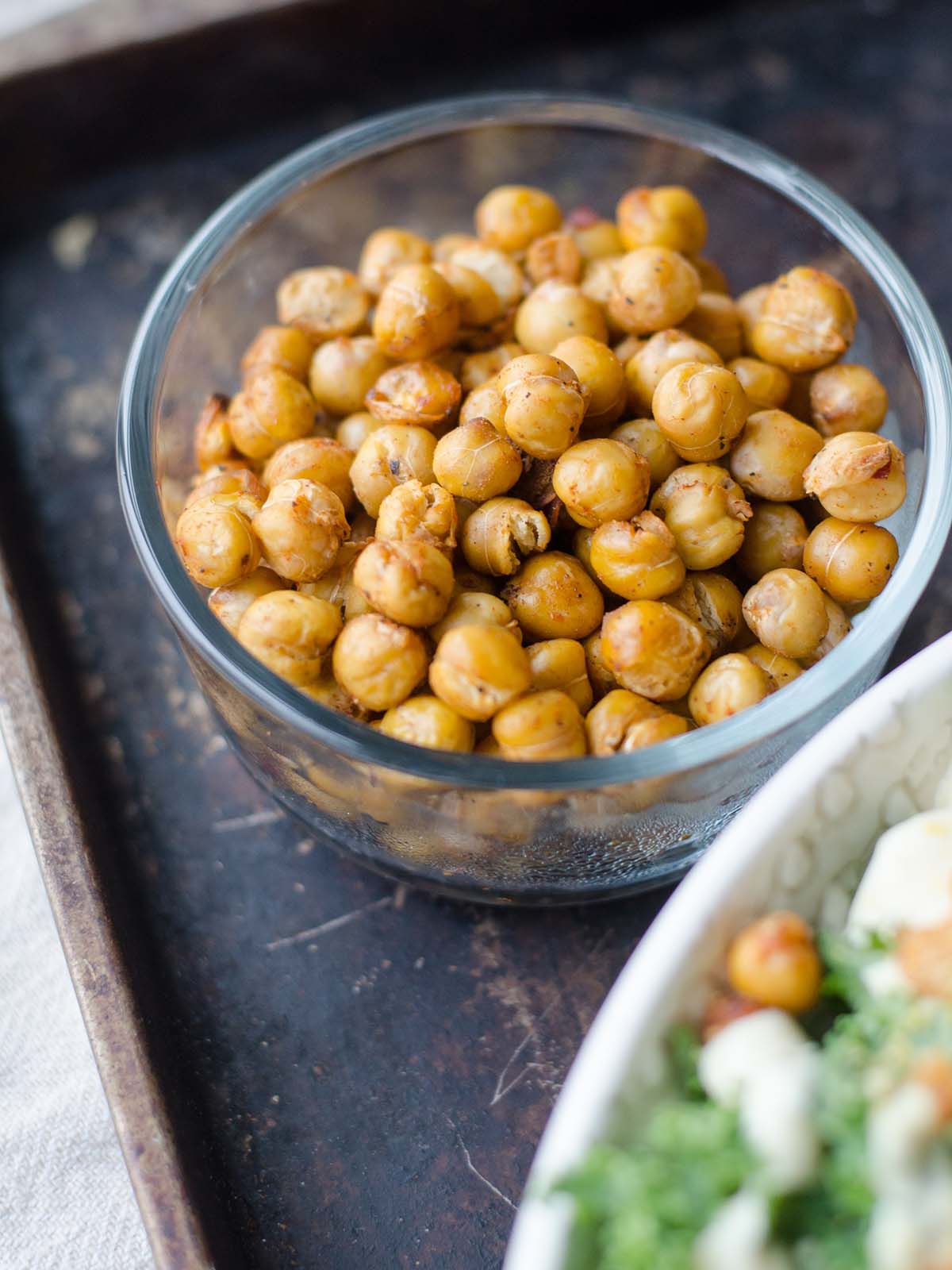
I hear from a lot of people who struggle with raw fresh vegetables and salads. At the minute, Winter is upon us and it's the perfect time for experimenting with warm salads and incorporating cooked ingredients. Roasting salad vegetables that are typically eaten raw is a delicious way to add them to your meals. I play around with carrots, radishes, bell peppers, tomatoes, fennel and even spring onion greens.
All of the above veggies, along with cucumber, rocket or even certain lettuces such as romaine or baby gem lettuces, are fabulous when briefly cooked into a stir fry or noodle dish.
Canned vegetables, when rinsed thoroughly, may also be easier to digest. The texture is usually softer, which can be off-putting for some. The high-heat canning/cooking process can't really be replicated when cooking at home, with regular domestic appliances. Some canned vegetables to consider include;
- tomatoes
- green peas
- bamboo shoots
- green beans
- beetroot
- baby corn
- mushrooms/champignons
- pumpkin
- hearts of palm
- callaloo
- artichoke hearts
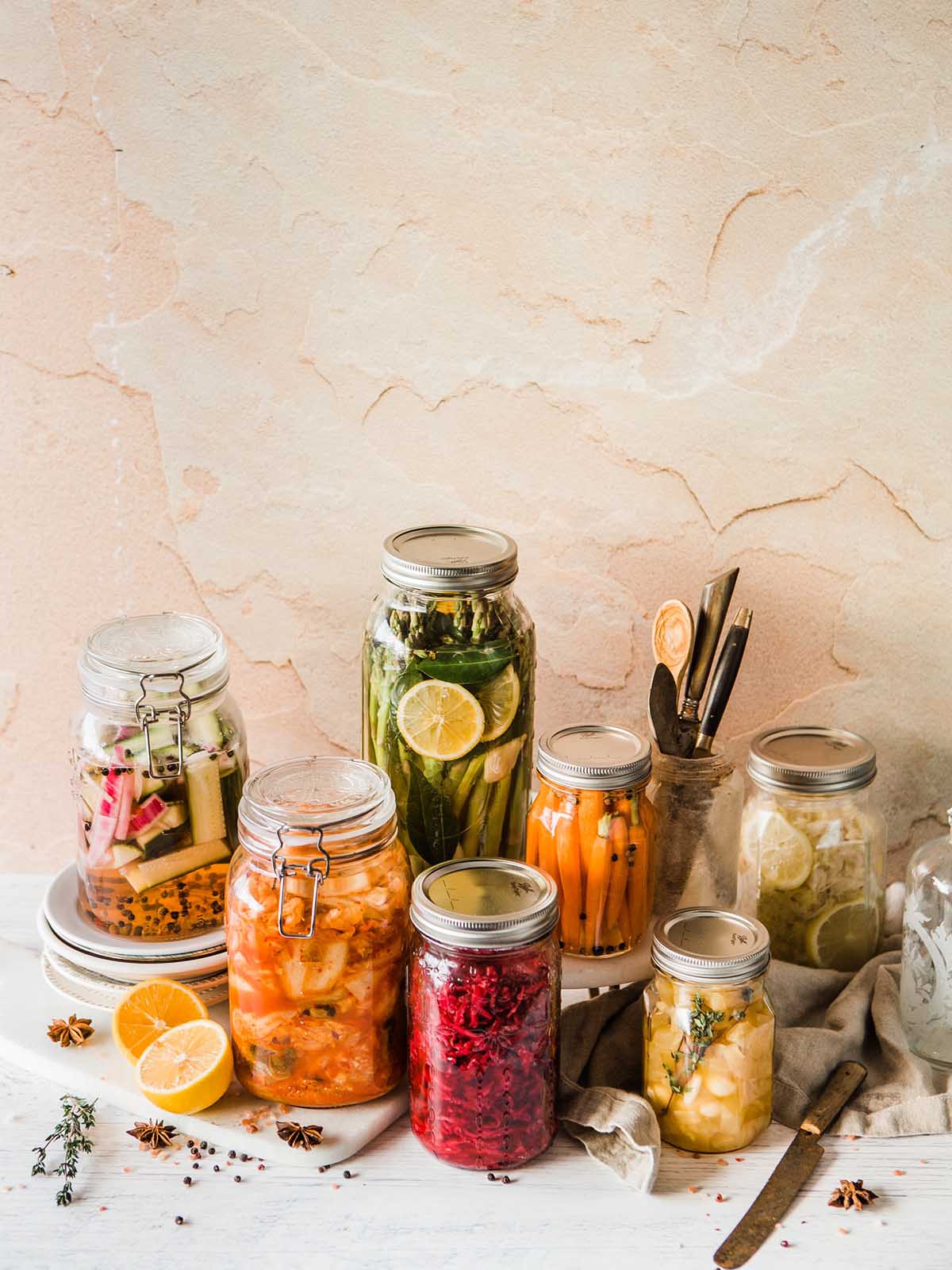
Fermenting veggies such as cabbage, kohlrabi, cauliflower and radish into sauerkraut or kimchi is something that you can do easily at home with minimal equipment. It's a good way to help you incorporate some of the hardier, more sulfurous vegetables into your diet. Fermented foods are great at feeding and boosting the good bacteria in your gut.
For the majority of fruit and veg the bulk of that pesky fibre, which is what can tend to irritate the digestive system, is actually in the peel. Something as simple as scrubbing or peeling your fruit and vegetables can have a positive effect.
To help your digestion along a little bit more try breaking down the foods into their smallest possible amounts:
- grate, shred or chop raw fruit, vegetables and nuts finely, either by hand or in a food processor
- blend into soups, sauces and smoothies
- juice fruit and vegetables to remove even more fibre
- try steaming, slow cooking, stewing or pressure cooking rather than stir-frying
- chewing each mouthful thoroughly into liquid before swallowing
All of these tips can help to break down the fibre as much as possible before these foods even hit the stomach. This extra help means you're not leaving all that hard work up to the digestive system.

I can't talk about vegan food prep and cooking methods without touching on the topic of tofu. I'll be honest, after a few dodgy experiences with bland tofu, I never touched the stuff until I started a low FODMAP diet. I suddenly realized that the meat alternatives that I'd been relying on all contained onion and garlic. This ruled them out during low FODMAP elimination and I needed an affordable alternative.
This forced me to start experimenting with tofu and I began playing around with the cooking methods that I used. Nowadays I can honestly eat it plain, straight out of the packet but it did take some time and some experimenting to get used to it. My taste buds needed to adjust and I had to find the brands and the cooking methods that suited me. I had to learn what I was looking for from the tofu to be able to enjoy using it in recipes.
Here are some quick tips for cooking tofu;
- choose the firm or the extra firm varieties which contain less FODMAPs
- find smoked tofu if you can. A lot of the hard work of getting all that flavour into the tofu has already been done for you
- squeeze as much water out of the tofu as possible before marinating
- freezing the tofu first allows you to squeeze a lot more of the water out. This gives it a much firmer meatier texture. It also creates more air holes which act as a sponge to soak up marinades and flavour
- grating tofu into really fine shreds helps with texture issues. When prepared this way it's perfect for adding to fried rice dishes, stir fry, soups and stews.
- plain tofu itself is very bland. Try throwing as much flavour at it as possible. Marinating it for at least a couple of hours before you start the cooking process helps too.
Please let me know in the comments if you'd like a whole post dedicated to cooking tofu that doesn't suck!

Veganuary Tip 5: Everybody farts!
Farting is natural. Everybody does it whether they admit to it or not. Most people fart between a dozen to two dozen times a day. The release of gas from your body is a sign of a perfectly healthy, normal digestive system. Unfortunately, most of us have been conditioned that farting is rude, dirty and embarrassing. This often makes our expectations of what we're prepared to tolerate a little bit unrealistic.
You can't expect to make significant changes to your diet without seeing some knock-on effects on your digestion. When you do start to increase things such as fibre, nuts, seeds, fruits, sulfurous vegetables, beans and lentils you're probably going to notice a difference in your digestion. This can be things such as:
- an increase in farting
- a change to the smell of your farts
- more frequent, regular bowel movements
- more size and bulk to your stools
- visible undigested plant material and fibres that you may not be used to seeing
- bloating
- trapped wind or mild cramping sensations if you've overdone it
All of these changes are usually temporary for most people and will often settle down once you get used to the new diet. Making tweaks and changes to suit your gut is easier than you think. Unless these symptoms get really bad, to the point where they're affecting your day-to-day life and you don't feel that you can cope with them, then usually there's nothing to worry about. As I always say, 'It's better out than in'.
If you do experience any significant changes to your weight, overall health or your digestion then you should always speak to a medical professional. Other than that a significant amount of farting is normal and you're usually good to go.
Have any of these tips encouraged you to eat more veggies in your diet this year? Please leave your tips and any Veganuary, vegan or IBS questions that you've got for me in the comments below. If you know someone that needs this post in their life then please pin, forward or share wherever you can. It makes a huge difference to the visibility of this blog and helps us to reach more people just like you.
Until next time keep eating those veggies and I'll speak to you soon
Michelle xoxo
P.S. This post is not sponsored by the lovely folks at Veganuary, we just happen to think that they're doing an awesome job. If you would like help and support to start eating more plant foods then please consider taking the Veganuary pledge. It's a free resource that gives you access to tons of recipes, articles, nutrition tips, special offers and daily emails full of information and inspiration.
Video Version
What do you wish someone had told you about being a vegan with IBS? Share it for anyone that needs to hear it in the comments below.



Comments
No Comments