

If you've never tried the peppery yet salty combo of radish and olives then you're seriously missing out. This fresh, colourful dish is light and crunchy, making it the perfect summer salad or side. Thanks to the zingy dressing and balance of bold flavours you'll be craving this all summer long.

I'd never eaten radishes with olives until I began the low FODMAP diet. During the elimination phase (and in desperation) I tried some weird and wonderful combinations and this one stuck. Since then I can often be found idling by the fridge, alternatively popping one of each into my mouth like sweets, while pondering what's for tea.
Jump to:
Ingredients
This combination of ingredients tastes great together and what's more the contrasting colours look lovely on the plate. Perhaps more importantly for my FODMAP friends, I chose these ingredients because they contain very few FODMAPs. This means you can safely eat them as a side dish to many GOS, fructan, and polyol-containing main meals without the risk of FODMAP stacking.

For the salad, you will need
- red round radish
- pitted green olives
- spring onions/scallions
- sundried tomatoes
- capers (in brine)
- watercress
- fresh pea shoots
For the dressing, you will need
- raw, apple cider vinegar
- chilli infused olive oil
- ground sumac
- peri peri/piri piri salt
See the recipe card for full quantities and the FODMAP ingredient notes for detailed low FODMAP portions.
Instructions
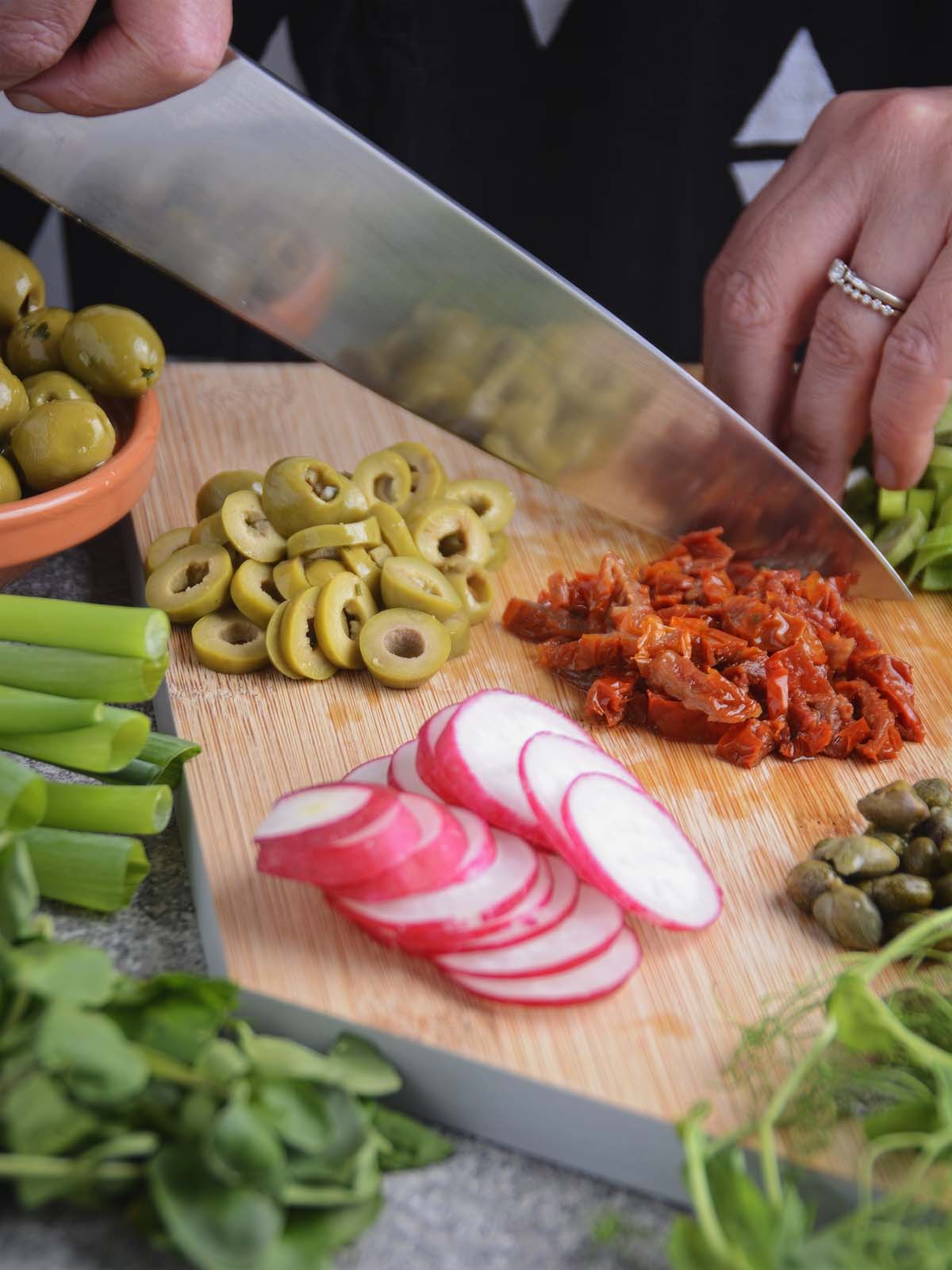
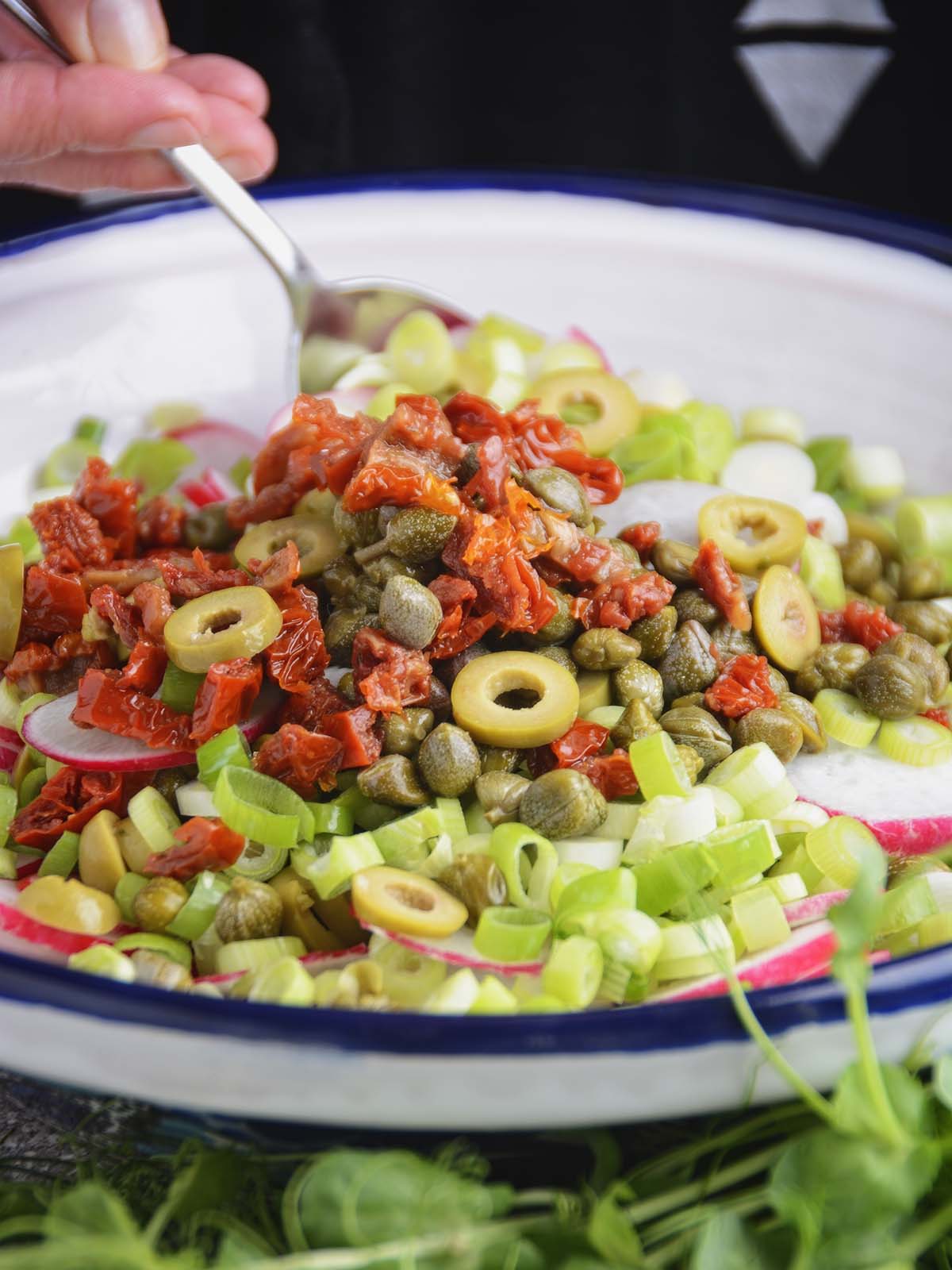
1: Finely slice your radish, olives, spring onions/scallions and sundried tomatoes.
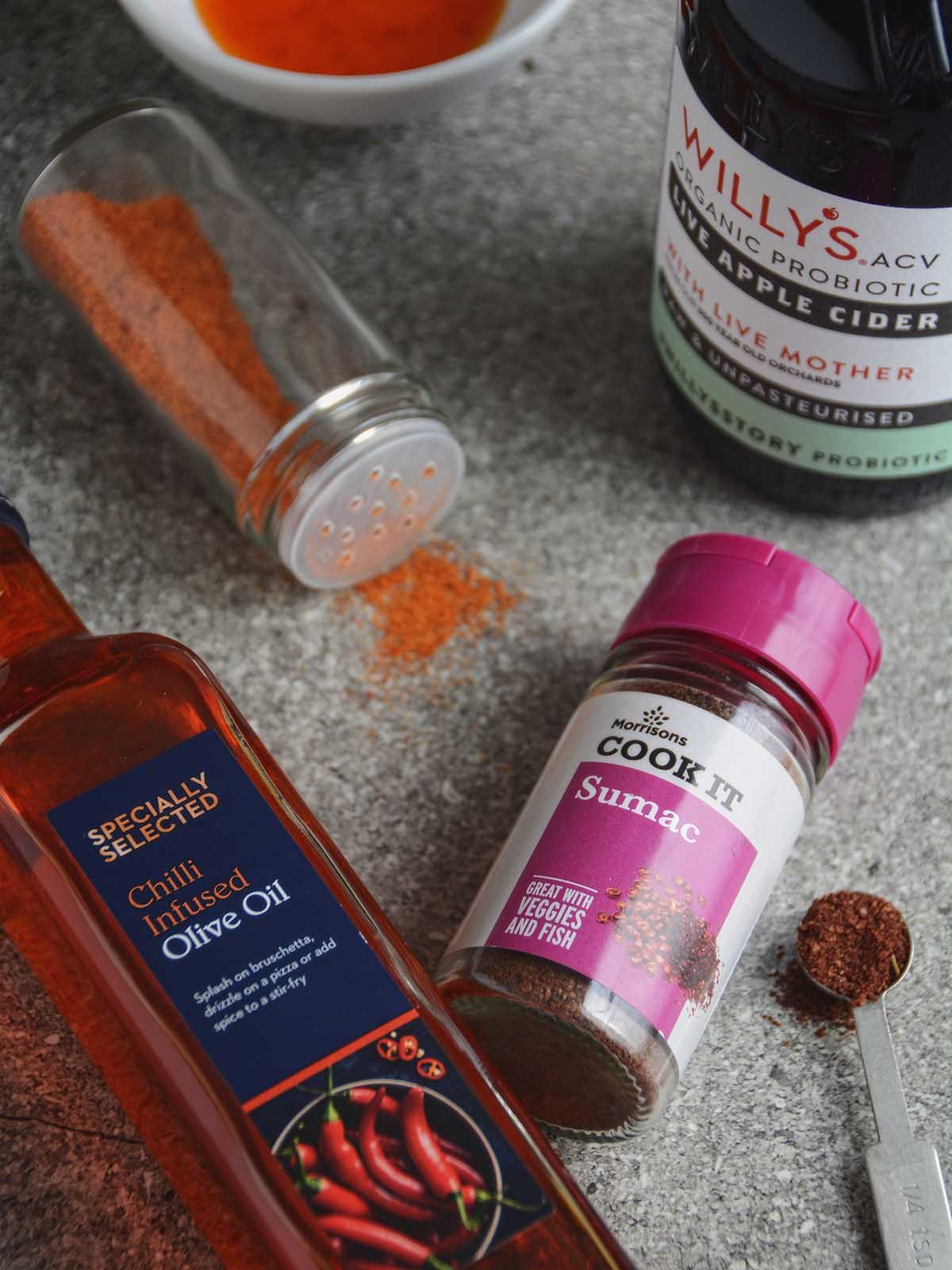
2: Whisk or shake the oil, vinegar, sumac, and peri peri/piri piri salt together until the dressing is well combined.
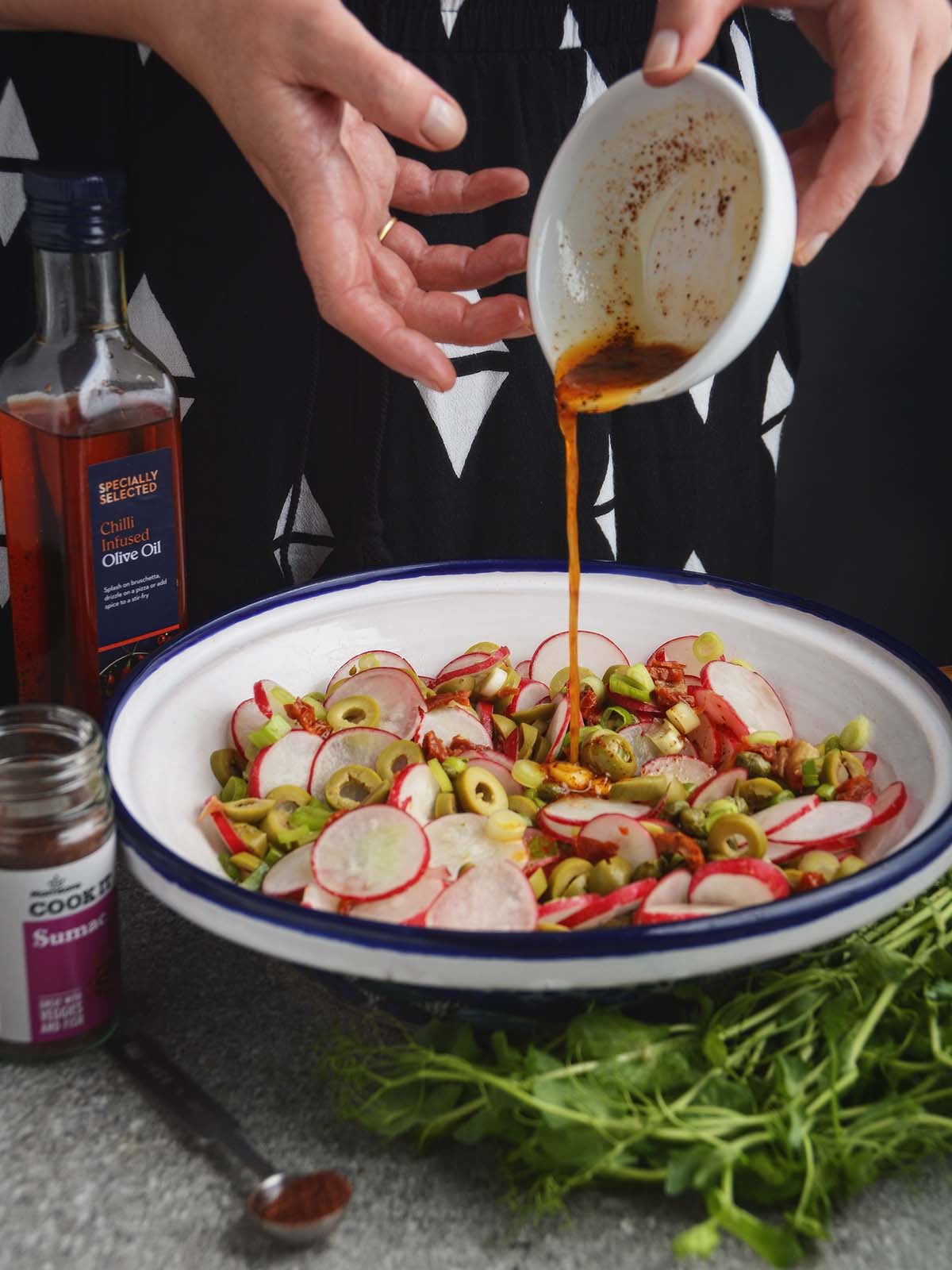
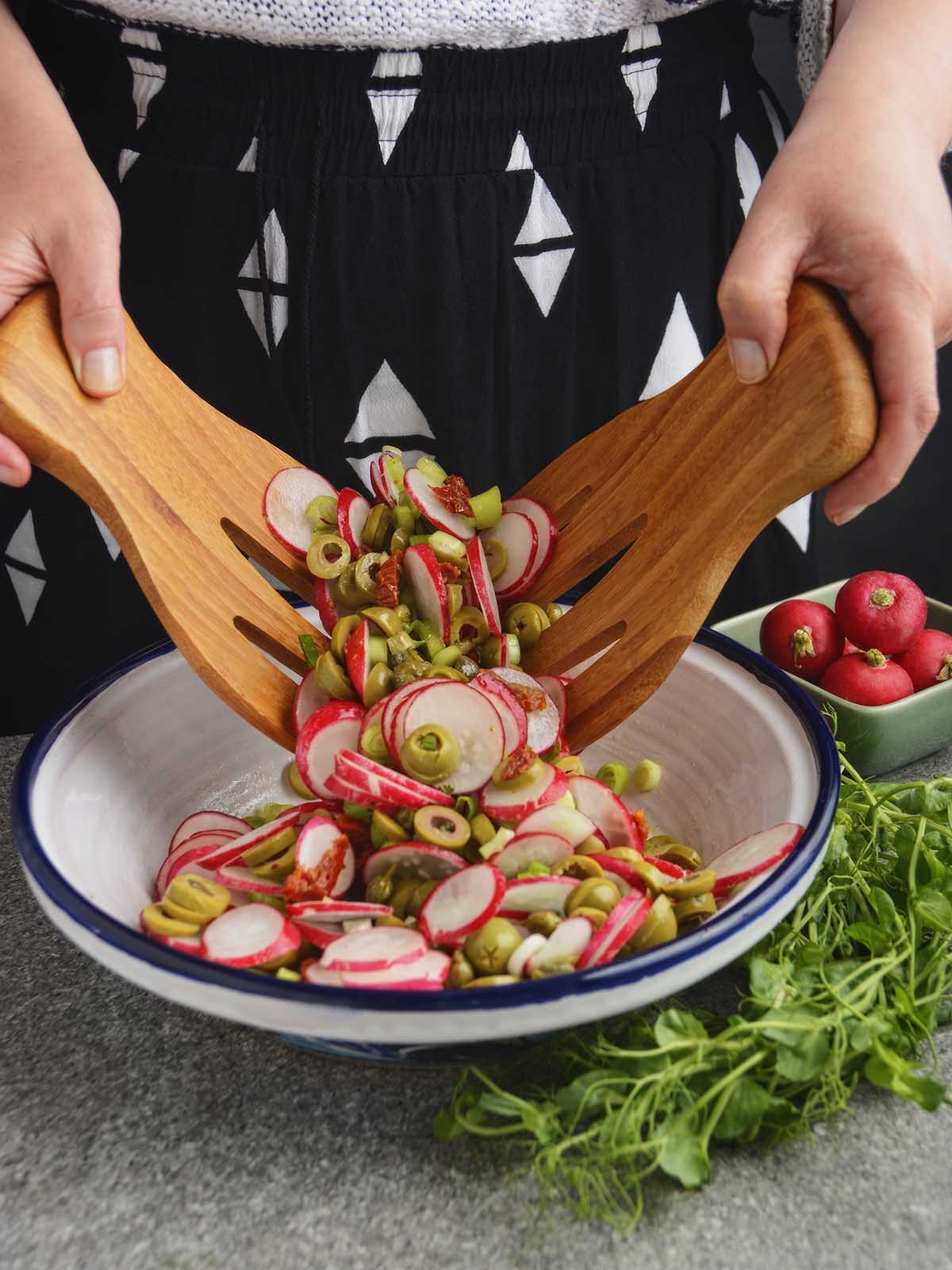
3: Drizzle the dressing into the more robust ingredients first, leaving the greens out until ready to serve.
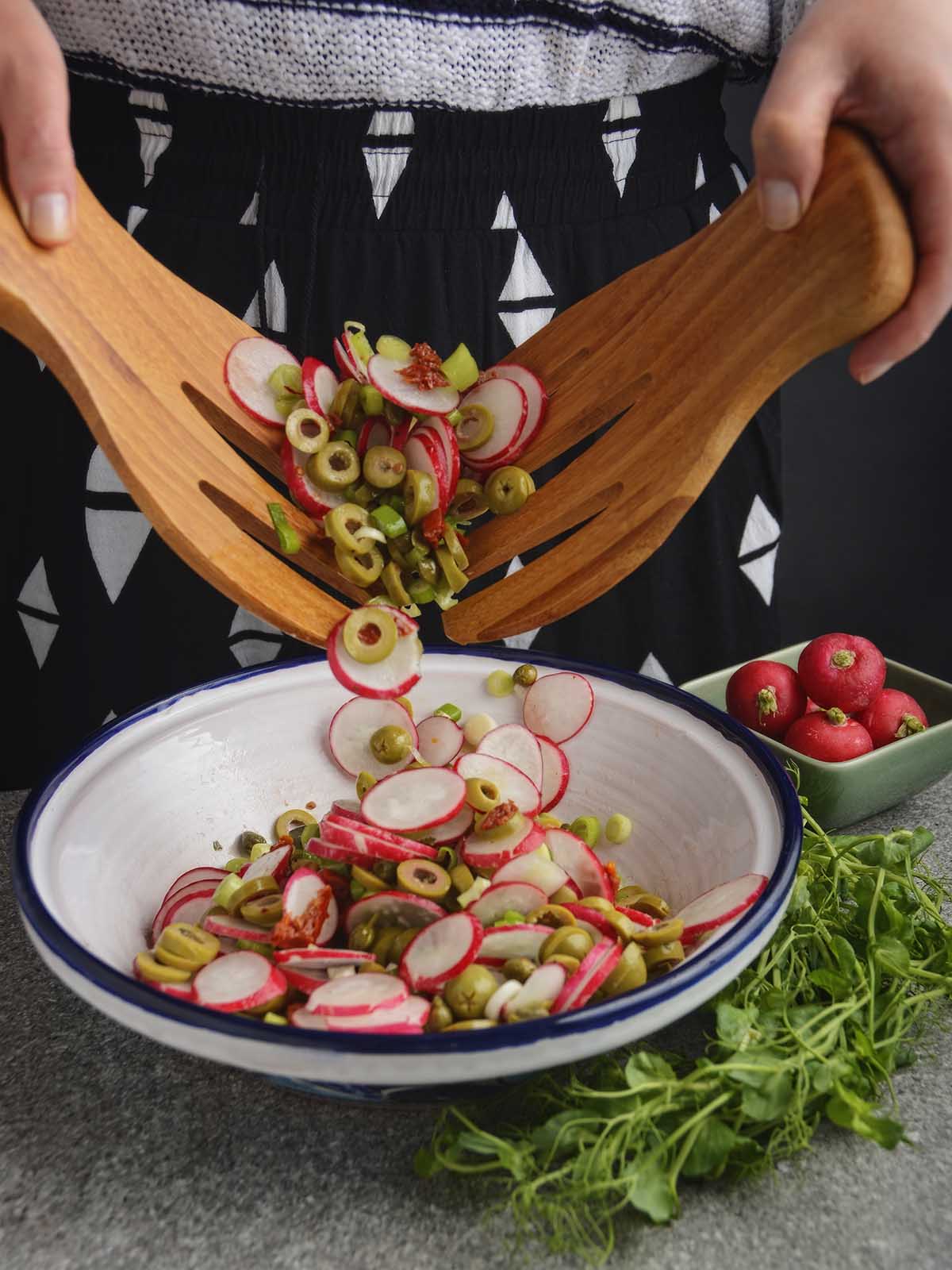
4: Toss the dressing thoroughly with the chopped ingredients before adding the greens on top and folding in gently.
Substitutions
- Greens - instead of watercress, you can use romaine lettuce, rocket, spinach or your favourite fresh greens. You can also swap out the pea shoots for a handful of fresh herbs. Parsley and dill would work well.
- Olives - use your favourite black, stuffed or whole olives in place of the pitted green olives
- Herby - if you can't tolerate or don't enjoy the heat then swap the chilli oil for a basil or herb-infused oil
Variations
- Peppery - if you're not afraid of the extra heat you can substitute the watercress and peas shoots for more peppery greens such as rocket/arugula, mustard leaf, mizuna or my personal favourite, homegrown nasturtium leaves.
- Mustard - stir Dijon mustard into the dressing for a little extra kick. Alternatively, use wholegrain mustard for added texture and mild, sweet heat
- Citrus - swap the apple cider vinegar for either lemon, orange or even grapefruit juice if you tolerate it.
- Spices - you can substitute the sumac with za'atar to give a more earthy flavour while still providing a similar zesty, citrus hit.
Equipment
A sharp knife is essential for slicing the radish so that the slices are thin but not translucent. Alternatively, you could use a mandoline with a 2.5mm blade. You don't want the radish to be too thin as it can quickly go soggy so I found the sweet spot to be roughly 4-5 slices from each radish.
Storage
This recipe should be eaten immediately and doesn't stand up well to storing or freezing, particularly once the dressing has been added.
Keep an eye on the quantities as you go. If you do end up chopping more than you need then it's best to store the ingredients separately in sealed containers in the fridge.
The dressing as written will store for at least two weeks in a glass jar or bottle in the fridge. This makes it handy to prep ahead of time or increase the quantities and use any leftovers throughout the week. Shake thoroughly before each use.
Cooks tip
When you taste the dressing you'll want to add salt, DON'T! The acidic flavour of the apple cider vinegar and the citrus notes from the sumac will balance out beautifully once the dressing mixes with the salty olives and capers.
Toss the watercress and peas shoots into the dressed salad immediately before serving in order to avoid the greens wilting too badly.
It's easy to swap the vinegar for another acid such as citrus juice. Stick to a 3:1 ratio of three parts oil to one part acid.
Money Saving Tips
Ingredients
Radish store well for a few weeks in the fridge so can be bought in bulk when you see them on offer. As with most fresh vegetables, I find they last longer if washed immediately before use.
Olives, sundried tomatoes and capers are generally more affordable when jarred rather than fresh.
Pea shoots can be expensive to buy and difficult to source. Thankfully, they're incredibly easy to grow at home on a sunny windowsill. I just use dried peas from the supermarket. Soak the peas in water overnight before spreading them in a single layer in a shallow tray and thinly covering them with a light sprinkling of compost. Keep the soil moist and the shoots will emerge within a few days. In two weeks you'll have an abundance of tender, fresh pea shoots. Harvest the shoots above the lowest leaves and they'll continue to grow for a second or even third crop.
Food waste
Radish is a great low FODMAP alternative to onion. You can shred the leftovers raw into coleslaw or a bahn mi style sandwich. You can also make a quick pickle with them or add them to a homemade batch of sauerkraut or kimchi.
Fresh olives will tend to spoil quicker than those in jars. I like to add them to pasta and grain dishes or blitz them into homemade pesto before they go off.
If you don't plan on using the rest of the capers, you can substitute them with finely diced gherkins.
If you're following a low FODMAP elimination diet, you can add the white bulbs of spring onions to a jar of water, and they will continue to produce a couple of harvests worth of cut-and-come-again green tops.

Shopping Tips
Willy's apple cider vinegar (500 ml). I recently discovered Willy's ACV, and it has quickly become my favorite brand. Organic, raw and containing the live mother from 300-year old orchards. Available in original and flavoured blends, but be aware that some of the flavoured varieties contain honey.
Smoke N Sanity chilli seasoning (198 g). If you're struggling to find a garlic-free peri peri/piri piri salt, this one would be a great substitute. It's Monash FODMAP certified, kosher, and free from garlic, gluten, and MSG.
Fody dressing garden herb (236 ml). If you're looking for a premade dressing this light and herby vinaigrette would work perfectly. It's certified low FODMAP by Monash University and is free from onion, garlic and gluten.
* We use affiliate links here to help support our work. Purchasing through these links does not affect your consumer rights or the price you pay but may result in The Irritable Vegan receiving a small commission payment. We thank you for supporting us in this way whilst you shop.
Recipe FAQ's
Yes. Monash University has conducted lab testing on red radishes, also known as table radishes, and rated them as FODMAP free. Although there is an arbitrary portion size of 75g or 4 radishes listed, they can be consumed freely according to one's appetite.
Monash has also tested white daikon radish and these have a low FODMAP portion of 75g or roughly ½ cup.
Other types of radishes such as watermelon, green meat, helios and black radish have not been tested. As with any untested food you could challenge these yourself.
Yes, green and black olives are considered low FODMAP. They have been lab tested by Monash and only trace amounts of FODMAPs were detected. A serving is listed as 15 small olives/60g/½ cup but they can be eaten freely, according to appetite.
When choosing olives ensure they are not marinated in high FODMAP ingredients such as garlic and onion.
As FODMAPs are only found in carbohydrate foods, 100% olive oil is FODMAP free. Watch out for garlic-flavoured olive oil that contains visible pieces of garlic as these are likely to contain fructans. Clear, garlic-infused olive oil is considered FODMAP free.

FODMAP Tips
FODMAP Servings
As written this recipe serves 4 as a side and has a low FODMAP portion of ¼ a serving. One serving of this recipe contains approx:
- 0 Fructans
- 0 GOS
- 0 Mannitol
- 0 Sorbitol
- >1 Fructose - 8g sundried tomatoes = 1 fructose serving + trace fructose from spring onion/scallion greens
- 0 Lactose - All of my recipes are vegan and therefore free from dairy and lactose. Yay!
Always refer to the Monash app for current safe serves and FODMAP categorisations.
FODMAP Ingredient Notes
Spring onions/scallions
Low FODMAP serving of 75g/1.5 cups. In October 2022, the listing for spring onion greens was updated. They changed from being listed as FODMAP free, eat freely according to appetite to being listed as fructose-containing. They now become moderate for fructose in large amounts of 265g and high for fructose at 330g. It is unlikely you would ever typically eat enough in one sitting to venture into moderate portions. The white bulbs are high in fructans with no safe serving listed.
Sundried tomatoes
Low FODMAP serving of 8g/ approx 3 pieces. At a serving size of 16g, they become moderate for fructose.
Fresh pea shoots
Currently untested. Avoid if in the elimination phase.
Beyond Elimination Phase
Due to its overall low FODMAP content, this would be a great recipe to use in some of your FODMAP reintroduction challenges.
For instance, to include this recipe in your fructan reintroductions, you can replace the spring onion/scallions with finely diced raw onion. To keep the recipe balanced I'd recommend only using this recipe for a day one (11g) or day two (22g) reintroduction amount of onion.
This salad would also make a great base for testing GOS reintroductions of canned, rinsed chickpeas.
As with any FODMAP challenge, ensure you're adding the full reintroduction portion of the food that you're testing to your individual serving.
See our blog post on which high FODMAP challenge foods to choose for more details.
Free From
- Celery free
- Coconut free
- Garlic free
- Gluten free
- Mustard free
- Peanut free
- Sesame free
- Soy free
- Tree nut free
- Wheat free
- Fructan free
- GOS free
- Lactose free
- Mannitol free
- Sorbitol free
Please always double-check your ingredients to ensure your products, brands and version is "free-from" if required. Where we list free from FODMAPs please be aware we are referring to free from excess FODMAPs as defined by low/high FODMAP limits in the Monash app and not a true allergy-safe definition of "free-from". Most plant foods will still contain some level of FODMAPs but in amounts that are considered to be tolerable for most people on the low FODMAP diet.
Pairing
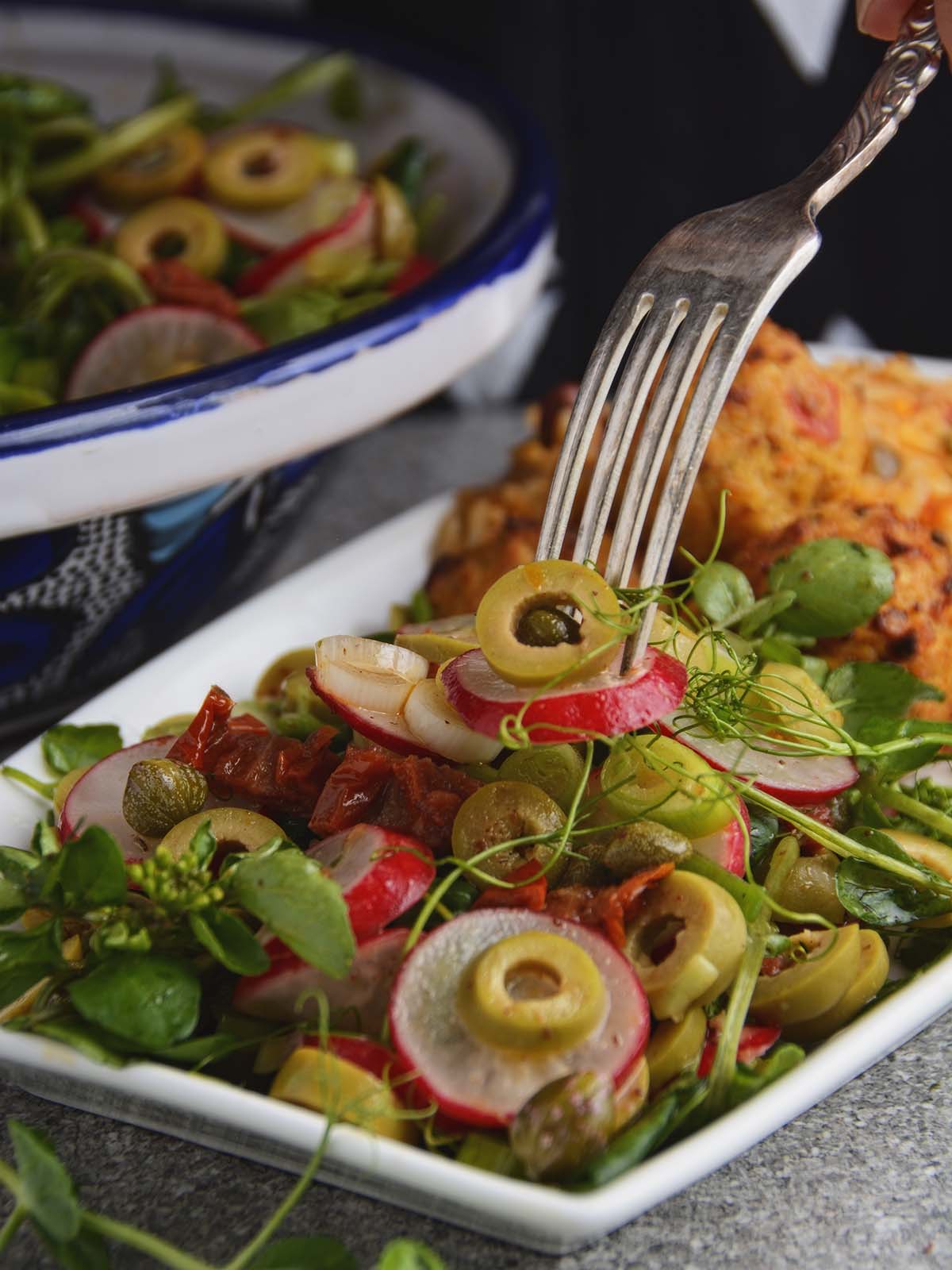
These are my favourite recipes to serve with this simple summer salad:


Recipe

Simple Radish and Olive Summer Salad
AFFILIATE DISCLAIMER
We may use affiliate links here to help support our work. As an Amazon affiliate we earn commissions off qualifying purchases. We thank you for supporting us in this way whilst you shop.
Equipment
- 1 Sharp knife or use a mandolin with a 2.5mm blade if preferred
Cook mode
Ingredients
Salad
- 300 g red, round radish
- 150 g green pitted olives
- 75 g spring onions/scallions - Use green tops only for low FODMAP
- 32 g sundried tomatoes - Bottled without garlic if low FODMAP
- 50 g capers - I used capers in brine
- 3 handfuls watercress
- 1 handful fresh pea shoots - Optional. FODMAPs currently untested
Dressing
- 3 tablespoon chilli oil - I used an infused olive oil
- 1 tablespoon apple cider vinegar
- ½ teaspoon sumac
- ½ teaspoon peri peri/piri piri salt - Optional. Ensure garlic and onion free if low FODMAP
Instructions
Dressing
- Whisk or shake together the dressing ingredients and set aside. 3 Tbsp chilli oil, 1 Tbsp apple cider vinegar, ½ tsp sumac and ½ tsp peri peri/piri piri salt. This dressing can be prepared and stored in the fridge up to 2 weeks in advance. Shake thoroughly before use.
Salad
- Finely slice300 g red, round radish with a sharp knife. Alternatively, use a mandolin fitted with a 2.5mm blade. You want the slices to be thin but not translucent so that they keep their crunch.
- Finely slice 150 g green pitted olives, 75 g spring onions/scallions and 32 g sundried tomatoes. Drain 50 g capers and put them all together with the radish in a bowl large enough for tossing the salad.
- Drizzle the dressing over the salad and toss everything together until well-coated.
- Tear or cut 3 handfuls watercress and the optional 1 handful fresh pea shoots into bite-sized pieces. Turn them gently into the salad just before serving. This helps to avoid the greens wilting and becoming overly soggy.
Notes
- 1 cup = 250 ml
- 1 tablespoon = 15 ml
- 1 teaspoon = 5 ml
Recipe Video
Have you tried this combination before?
Let us know in the comments below if this fresh and salty salad hit the spot. What weird and wonderful combinations do you like to eat? Please don't forget to rate ⭐, review and pin the recipe. Every single one helps more people, just like you, to find it when they search.
Tag us on Instagram @theirritablevegan and #theirritablevegan so we can see your creation and share it with our community.


Comments
No Comments